
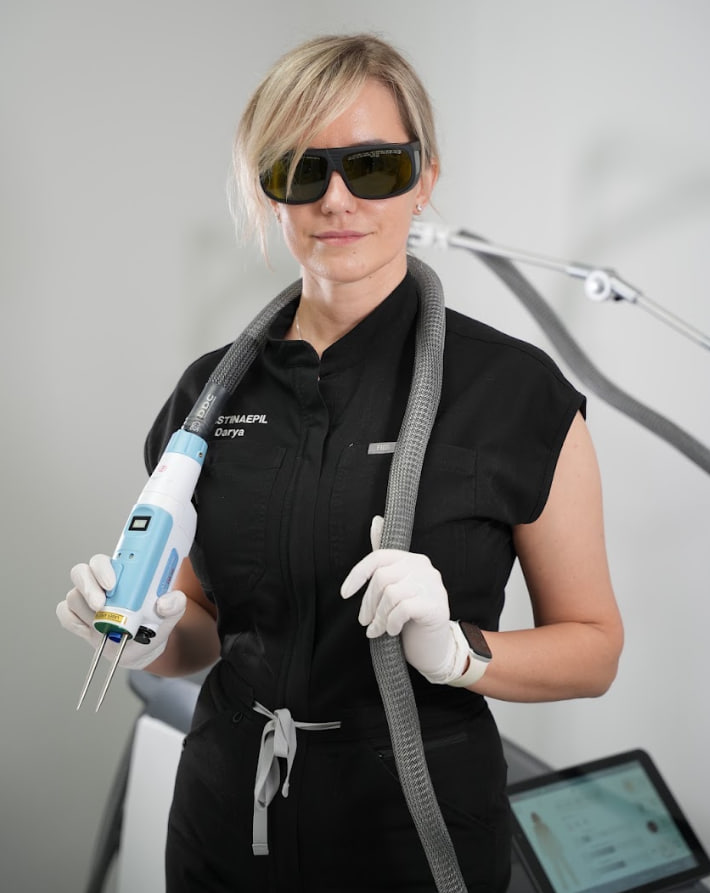
Most people who start researching hair reduction have already spent years on shaving and waxing and are looking for something that actually holds up over time. The problem is that “hair reduction” gets used as an umbrella term for several very different technologies, and they don’t deliver anything close to the same results. Choosing the wrong one means slower progress, weaker outcomes, and sometimes paying for a second treatment to fix what the first one didn’t finish.
This guide compares the three main professional options, laser, IPL, and electrolysis, so the differences are clear before walking into any consultation.
Why Shaving and Waxing Never Actually Solve the Problem
Shaving and waxing remove hair that’s already grown, but neither one touches the structure that produces it. The follicle stays completely intact in both cases, which is why regrowth follows a predictable schedule no matter how consistently either method is used. Shaving brings visible stubble back within a day or two. Waxing buys a few extra weeks, but the follicle survives the process and resumes its normal cycle once that window closes.
Beyond the repetition, both methods carry a real toll on skin. Shaving is a common cause of ingrown hairs and razor burn, since cutting hair at an angle leaves a sharp edge that can curl back into the follicle as it regrows. Waxing is more thorough at the surface but still painful, and repeated waxing over the same areas for years doesn’t meaningfully weaken the follicle, even though some people notice slightly finer regrowth over time from cumulative trauma to the root.
What “Long-Term” Actually Means in This Context
Before comparing treatments, it helps to be precise about the language, because providers and marketing copy often blur it.
Shaving and waxing fall under temporary removal: they take hair from at or above the skin’s surface without affecting the follicle underneath. Laser and IPL-based treatments fall under long-term hair reduction, a category recognized for methods that meaningfully reduce regrowth for months or years, but not necessarily forever. Electrolysis sits in its own category as the method associated with permanent hair removal, since it treats and destroys each follicle individually rather than relying on light absorption.
This distinction matters because it shapes what’s realistic to expect. A provider who claims laser will eliminate every single hair permanently is overstating what the treatment actually does. A provider who can’t clearly explain the difference between these categories is worth being cautious about.
How Laser Hair Reduction Actually Works
Laser-based treatment relies on a principle called selective photothermolysis. Light energy is absorbed by melanin, the pigment inside the hair follicle, and converts to heat once absorbed. That heat damages the follicle enough to disrupt its ability to produce hair going forward, while leaving the surrounding skin largely unaffected. The word “selective” is doing real work here: the laser is designed to target pigment in the follicle specifically, not the skin around it.
This is also why results vary noticeably from person to person. The whole process depends on contrast between the hair’s pigment and the surrounding skin tone. The greater that contrast, dark hair against fair skin being the clearest example, the more precisely the laser can lock onto the follicle, which is why that combination tends to produce the strongest results in the fewest sessions.
The Three Main Laser Types
Clinical laser systems aren’t interchangeable, and the differences between them matter for both safety and results.
The diode laser operates in a wavelength range that works across a fairly broad set of skin types, and is commonly paired with a built-in cooling mechanism to make treatment more comfortable.
The Alexandrite laser is a well-established option for lighter skin tones paired with dark hair, and tends to deliver strong reduction over a standard series of sessions when used on the right candidate.
The Nd:YAG laser uses a longer wavelength, which allows it to penetrate more deeply while being absorbed less by surface-level melanin in the skin. That property makes it the safer, more appropriate choice for darker skin tones, where other laser types carry a meaningfully higher risk of pigment changes or burns.
The right laser for any given person isn’t a matter of what a particular provider happens to have on hand, it’s determined by skin tone, hair color, and the area being treated. A properly trained provider evaluates all three before recommending anything.
Where IPL and Electrolysis Fit In
IPL: Accessible, but Less Precise
IPL stands for Intense Pulsed Light, and despite how it’s sometimes marketed, it isn’t a laser. Instead of a single focused wavelength, IPL delivers a broader spectrum of pulsed light, which the hair’s pigment absorbs and converts to heat in a similar way to laser, just less precisely targeted.
That broader spectrum is the core trade-off. IPL can produce visible reduction in the short term, but the evidence for reduction that holds up well beyond six months is generally weaker than what’s seen with dedicated laser systems. It tends to be more accessible and more widely available than professional laser treatment, which makes it a reasonable option for smaller areas or lighter maintenance needs. For meaningful, lasting reduction across larger areas of the body, laser generally has the stronger track record.
Electrolysis: The Only Method Tied to Permanent Removal
Electrolysis works on a completely different mechanism than either laser or IPL. A fine probe is inserted directly into each individual hair follicle, and an electrical current destroys the cells responsible for producing hair. Because this process doesn’t depend on melanin at all, electrolysis works across every hair color and skin type, including blonde, gray, and red hair, none of which respond well to laser or IPL.
The trade-off is time. Treating each follicle one at a time makes electrolysis very slow across larger surface areas. It’s a strong, practical option for small, well-defined zones like the upper lip, chin, or eyebrows. For larger areas like the legs, back, or a full bikini area, the sheer number of sessions required makes laser a far more efficient path for most people.
How Many Sessions Are Actually Needed
Most people need somewhere between four and eight sessions to see meaningful reduction, with darker skin tones sometimes requiring closer to ten. The reason multiple sessions are necessary comes down to the hair growth cycle: not every follicle is in its active growth phase at the same time, and laser energy is only effective against follicles that are actively growing when treated. Spacing sessions roughly four to six weeks apart gives each subsequent treatment a chance to catch a fresh wave of follicles that have since entered that active phase.
After a single session, most people see a modest but noticeable reduction in the treated area. That effect builds with each additional session, and by the end of a full series, many people see a substantial overall reduction in hair density. Maintenance sessions may still be needed months or years later, particularly in hormonally sensitive areas like the face or bikini line, but the ongoing hair burden stays far below what shaving or waxing alone would produce.
How Skin Tone and Hair Color Shape the Outcome
The Fitzpatrick scale, which classifies skin tone from very fair to very dark, plays a direct role in both which laser type is appropriate and how many sessions someone is likely to need. Lighter skin tones paired with dark hair typically see the strongest results in the fewest sessions. Medium to darker skin tones can absolutely achieve strong results too, but generally need the right equipment, most often an Nd:YAG system, along with more conservative settings to keep the risk of pigment changes low.
Hair color matters just as much as skin tone. Dark, coarse hair has the most melanin available for the laser to absorb, which is exactly why it responds best. Blonde, gray, and red hair carry far less melanin, which makes them genuinely difficult to treat with any light-based method, laser or IPL. For anyone in that category, electrolysis is worth serious consideration for smaller, targeted areas. For everyone else, dark hair on virtually any skin tone can see meaningful, lasting reduction with the right laser system and an experienced provider.
Side Effects and Who Should Be Cautious
After a laser session, mild redness, slight swelling, and some skin sensitivity in the treated area are normal and typically settle within a day or two, similar to a mild sunburn reaction. These effects are generally a sign the laser reached the follicle as intended, not a cause for concern on their own.
Rarer but more serious risks include burns, blistering, and changes in pigmentation, either lighter or darker than the surrounding skin, along with scarring in uncommon cases. These complications are uncommon when treatment is performed correctly, but the risk rises meaningfully when an inexperienced operator uses incorrect settings, or when someone comes in with recently tanned skin. Working with a properly trained provider who adjusts settings to an individual’s specific skin profile is the most reliable way to keep serious side effects off the table.
Situations That Call for Caution or a Different Approach
A handful of situations call for postponing treatment or reconsidering the method altogether. Pregnancy is treated as a firm reason to hold off. Active skin infections in the treatment area, recent tanning or significant sun exposure, a personal history of keloid scarring, and certain photosensitizing medications all warrant a direct conversation with a provider before moving forward. Anyone with a history of herpes simplex who’s considering facial treatment should mention that upfront so appropriate precautions can be taken.
A few preparation steps apply broadly and make a real difference in both comfort and outcome:
- Avoid waxing or plucking the treatment area for at least several weeks beforehand, since the follicle needs to remain intact for the laser to have a target. Shaving beforehand is fine, since it doesn’t disturb the follicle.
- Stay out of the sun and avoid self-tanner in the treatment area for at least two to four weeks before a session, since tanned skin raises the risk of an adverse reaction.
- Apply broad-spectrum sunscreen consistently after each session, since treated skin is more sensitive to sun exposure in the days that follow.
- Avoid heat, friction, and harsh skincare products on the treated area for roughly 24 to 48 hours after each session.
Why the Provider Matters as Much as the Technology
Device quality, laser type, and operator training all directly shape both safety and results. A provider who uses a single device and setting for every client, regardless of skin type, will end up under-treating some people and putting others at genuine risk. Medically trained providers can adjust fluence, pulse duration, and cooling settings based on an individual’s Fitzpatrick type, hair density, and relevant medical history, and that level of customization is a large part of what separates consistent long-term results from inconsistent, disappointing ones.
Providers without proper training or medical oversight tend to default to overly conservative, lower-efficacy settings out of caution, or in worse cases, miss contraindications that a more experienced provider would catch immediately. When evaluating any provider, the training and credentials of the person actually performing treatment deserve more attention than price or convenience.
What a Thorough Consultation Should Include
A good consultation is the clearest signal of whether a provider is worth trusting with a multi-session commitment. It should include an honest assessment of skin and hair type, a clear explanation of which laser system fits that profile and why, a realistic estimate of how many sessions to expect, and a pre- and post-care plan that’s specific rather than generic. A provider who skips straight past the assessment is usually a sign the rest of the process will be less personalized than it should be.
The Bottom Line
Shaving and waxing are habits people default to out of convenience, but they carry a real ongoing cost in time, repeated irritation, and skin issues that never fully resolve. IPL is accessible and reasonable for smaller areas or light maintenance, but the evidence for it holding up long-term is weaker than what laser typically delivers. Electrolysis is the only method genuinely associated with permanent removal, but its pace makes it impractical for anything beyond small, targeted areas.
For most people looking to reduce hair meaningfully and durably across larger areas of the body, professional laser treatment performed by a properly trained provider, using equipment matched to that person’s specific skin tone and hair type, remains the strongest option among the three. Skin tone, hair color, and the specific area being treated all shape which approach makes the most sense for any individual, which is exactly why a proper consultation matters more than any general comparison ever could.