
The hair removal industry looks meaningfully different than it did even three or four years ago. The global laser hair removal market is on track to keep growing at a double-digit rate through the rest of the decade, and that growth isn’t just about more people wanting smooth skin, it’s about the technology and the way clinics operate finally catching up to what clients have wanted all along: treatment that actually works for their specific skin and hair, delivered by someone who knows what they’re doing, without the guesswork that used to define this category.
Here’s what’s actually changing heading into 2027, and what to look for in a provider that’s keeping up with it rather than running on equipment and assumptions from a decade ago.
Trend 1: Laser Hair Removal Is Finally Living Up to “All-Inclusive”
For years, laser hair removal came with an asterisk: it worked best on light skin with dark, coarse hair, and everyone outside that narrow combination was told to manage expectations or look elsewhere. That’s changed dramatically. Newer laser systems, particularly those using multiple wavelengths or longer-wavelength Nd:YAG-adjacent technology, can now treat a genuinely wide range of skin tones safely and effectively, often in fewer sessions than older equipment required.
This shift matters because it’s finally closing a gap that shut a lot of people out of a treatment that works. The catch is that the equipment alone doesn’t make a clinic inclusive, the provider still has to know how to select the right settings for each individual rather than running everyone through the same protocol. At KristinaEpil, this is built into how every consultation works. The studio uses Alexandrite and Diode laser technology specifically because, together, they cover the full spectrum of skin phototypes, and every client’s settings are chosen based on their actual skin tone and hair, not a generic default.
Trend 2: Men Are Driving a Huge Share of Industry Growth
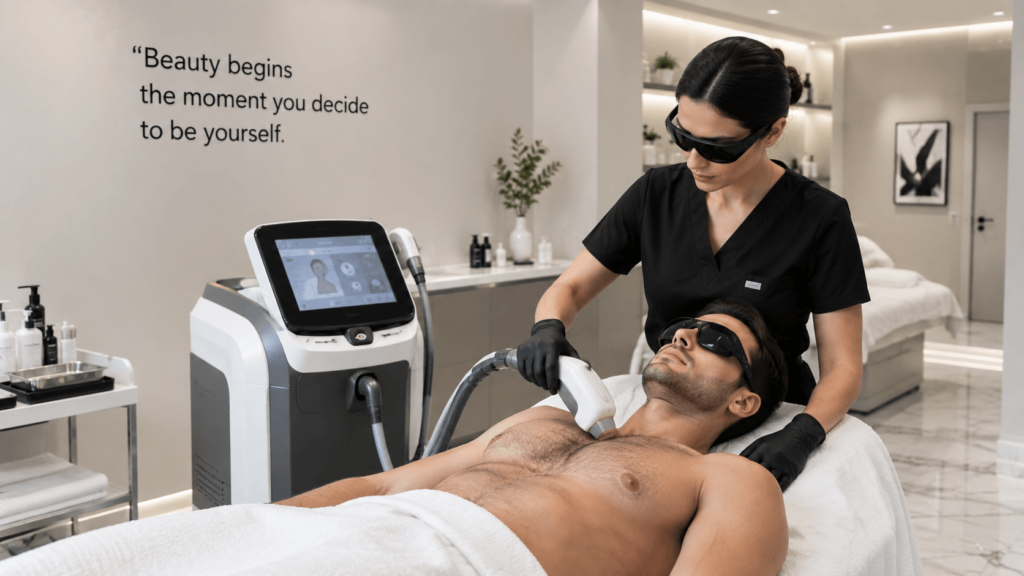
Laser hair removal used to be marketed almost exclusively to women. That’s no longer close to accurate. Industry data consistently shows male grooming as one of the fastest-growing segments in the category, with back, chest, shoulders, and beard-line definition among the most requested treatments. Larger, more comfortable devices have made bigger areas like the back genuinely practical to treat in reasonable time, which has removed one of the bigger practical barriers that used to keep men away from the treatment.
KristinaEpil has built out a full menu of men’s services covering these exact areas, treated with the same equipment, hygiene standards, and individual consultation process used for every other client. The shift toward men choosing laser over a lifetime of shaving or waxing large areas like the back isn’t a niche trend anymore, it’s a mainstream grooming decision, and the studio is set up to treat it as one.
Trend 3: Clients Are Starting Earlier and Thinking Longer-Term
A noticeable shift in client behavior across the industry: younger clients are increasingly approaching hair removal as a long-term maintenance decision rather than a reactive fix. Instead of waiting until years of shaving or waxing have become genuinely frustrating, more people are starting a laser course earlier, treating it the same way they’d treat a skincare routine, something to invest in consistently rather than address only once it’s become a real problem.
This shift rewards clinics that think in terms of a full treatment plan rather than a single transaction. KristinaEpil’s electronic record-keeping and consultation-first approach are built for exactly this kind of long-term relationship rather than a one-off visit, tracking a client’s progress across an entire course and adjusting as their skin and hair respond over time.
Trend 4: Hormonal Awareness Is Reshaping How Facial Hair Gets Treated
There’s a growing recognition across the industry that facial hair, particularly on the chin, jawline, and upper lip, is often tied to hormonal factors: PCOS, perimenopause, menopause, and other conditions that affect androgen activity. Clinics that understand this are adjusting expectations accordingly, being upfront that laser treats the visible hair and the follicle rather than the underlying hormonal cause, and setting realistic expectations about maintenance sessions for clients dealing with ongoing hormonal hair growth.
This kind of honesty matters more than it might seem, because it’s the difference between a client who understands what to expect and one who feels like the treatment failed them when a new hair appears months later for reasons entirely outside the laser’s control. A consultation at KristinaEpil includes exactly this kind of conversation, particularly for facial zones, so clients go in with a realistic picture rather than an oversold promise.
Trend 5: Consultations Are Becoming More Personalized, Not Less
As the industry matures, the clinics pulling ahead are the ones treating every client as an individual assessment rather than running people through a standardized intake built around gender, age, or a generic skin category. The most effective consultations now focus on the actual skin condition, hair growth pattern, and personal goals in front of the specialist, rather than a one-size template applied to whoever walks in.
This is precisely how KristinaEpil has always structured its consultations: an assessment of your specific skin tone, hair color and density, and goals, before any recommendation is made, tracked through your course rather than treated as a formality before an upsell.
What These Trends Add Up To
None of these shifts are happening in isolation, they’re all pointing in the same direction: toward laser hair removal that’s more inclusive, more personalized, and more honest about what it can and can’t do, delivered by providers who treat the underlying technology and training as seriously as the results they’re promising.
That’s a meaningfully higher bar than the industry operated on even a few years ago, and it’s not a bar every studio in a crowded market like Brooklyn is actually meeting. Some are still running older equipment under new marketing. Some skip the real consultation in favor of a quick sign-up. Some don’t have the range of laser types needed to treat every skin tone that walks through the door safely.
KristinaEpil’s approach, medical-grade Alexandrite and Diode technology suited to every skin phototype, a real consultation and electronic progress tracking for every client, and a team of certified specialists working in a strictly hygienic, comfortable studio, isn’t a response to these trends so much as the standard the studio has operated on from the start. The industry is simply catching up to what a properly run laser hair removal practice should have looked like all along.
Frequently Asked Questions
Does newer laser technology really work better for all skin tones?
Yes, when the equipment and the provider’s training actually match. Longer-wavelength and multi-wavelength laser systems have significantly expanded what’s safely treatable across the skin tone spectrum, but the technology alone isn’t enough, the provider still needs to select the right settings for each individual. KristinaEpil’s use of both Alexandrite and Diode technology, combined with an individual skin and hair assessment at every consultation, is built around exactly this principle.
Is laser hair removal for men really as effective as it is for women?
Yes. The underlying mechanism is identical regardless of gender, the laser targets pigment in the hair follicle either way. Men’s hair is often coarser and denser, particularly on areas like the back and chest, which can mean sessions are approached a bit differently, but the results and safety profile are the same.
Should I start laser hair removal now if I’m not dealing with a major hair problem yet?
There’s no requirement to wait until hair removal feels like a real frustration. Starting earlier, before years of shaving or waxing accumulate, is an increasingly common and completely reasonable approach, and a consultation can help map out a realistic plan based on your actual hair and skin rather than waiting for a specific trigger point.
If my facial hair is hormonal, will laser hair removal still work?
Yes, laser treatment is generally effective on pigmented hormonal hair, but it’s worth understanding that it addresses the visible hair and follicle rather than the underlying hormonal cause. That means occasional maintenance sessions are common for hormonally influenced areas even after a full course, which your specialist can walk through during your consultation.
How is a consultation at KristinaEpil different from just booking a package online?
A consultation at KristinaEpil starts with an actual assessment of your skin tone, hair color and density, and goals before anything is recommended, and that assessment is tracked electronically throughout your course rather than treated as a one-time formality. This is different from simply purchasing a generic package sight unseen.