
Anyone who shaves regularly knows the routine by heart: a few minutes in the shower every two or three days, the occasional nick, the stubble that shows up again almost immediately. Waxing trades that daily annoyance for a monthly one, an appointment every three to five weeks that never quite disappears from the calendar. Both methods work in the moment. Neither one actually ends.
Laser hair removal takes a different approach entirely. Instead of cutting or pulling hair that’s already grown, it targets the follicle that produces it, aiming to slow or stop regrowth at the source. That difference sounds simple, but it changes almost everything about how the three methods compare once you look past a single appointment and start counting years instead of weeks.
This article walks through that comparison using real numbers: how long each method lasts, how much time it demands over a decade, what it costs across a lifetime, and what it does to your skin along the way.
How Each Method Actually Works on the Hair Follicle
The difference between shaving, waxing, and laser isn’t really about convenience. It’s biological.
Shaving removes hair at the surface of the skin with a blade. The follicle underneath is completely untouched, which is why regrowth shows up within a day or two. No matter how many years someone has been shaving, the follicle doesn’t change and the cycle doesn’t slow down. Every shave starts from zero.
Waxing goes a step further by pulling the hair out from the root, which is why results last longer, typically three to five weeks. Some people notice that hair grows back a little finer or sparser after years of consistent waxing, a result of repeated trauma to the root. But that’s a minor effect, not a form of permanent reduction. The follicle survives the process and keeps producing hair on roughly the same schedule indefinitely.
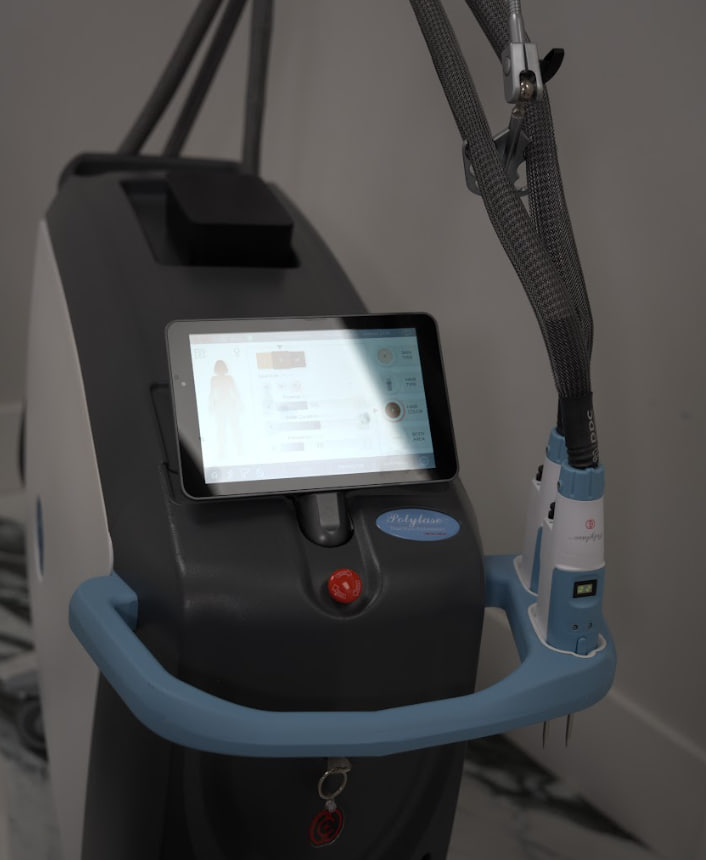
Laser works on a different principle altogether. A concentrated beam of light passes through the skin and is absorbed by melanin, the pigment in the hair follicle. That absorbed energy converts to heat, which damages the follicle’s ability to produce new hair. Because hair grows in cycles and only actively growing follicles respond to treatment, a single session can’t catch everything, which is why a full course typically runs six to ten sessions spaced four to eight weeks apart. By the end of that course, most people see a significant, lasting drop in hair density rather than a temporary pause.
How Long Results Last: Laser, Waxing, and Shaving Compared
Because the three methods work so differently, their timelines aren’t even close.
Shaving buys you a day, sometimes two, before stubble returns. There’s no cumulative benefit no matter how long you’ve been doing it.
Waxing extends that window to three to five weeks, but it resets every time. You’re not moving toward a finish line, you’re maintaining a loop that continues for as long as you keep booking appointments.
Laser is the outlier. After completing a full series, most people see a substantial and lasting reduction in hair density, with plenty of areas showing results that hold for a year or more between touch-ups. It isn’t always permanent for every hair type and skin tone, and occasional maintenance sessions are common, but the frequency of hair removal drops dramatically compared to either shaving or waxing. Instead of a task you repeat every few days or weeks, it becomes something you think about once or twice a year, if at all.
The Time You’re Actually Spending on Hair Removal
The financial side of this comparison gets most of the attention, but time is just as real a cost, and it’s one people rarely add up.
Take a fairly typical shaving routine covering legs, underarms, and the bikini line. At roughly 15 to 20 minutes per session, three or four times a week, that comes out to somewhere around 40 to 50 hours a year. Stretch that across a decade and you’re looking at hundreds of hours spent on something that leaves no lasting result behind.
Waxing happens less often, but each appointment carries more overhead: travel time, waiting, and the session itself. Thirteen appointments a year per area, factoring in a round trip and a 30 to 60 minute treatment, can easily add up to 25 to 35 hours annually if you’re maintaining two or three areas. There’s also the in-between period to consider. Hair needs to grow out enough to be waxed, which means living with visible regrowth for a chunk of every cycle.
Laser flips that structure. The time investment is front-loaded into the treatment series itself, and it has a defined endpoint. Once a course is finished, most people find their grooming routine shrinks to a few minutes a month, sometimes less, for treated areas.
Where the Time Savings Add Up Most
Legs, underarms, and the bikini line tend to be where people notice the biggest shift, largely because those are the areas that demand the most frequent shaving and the most uncomfortable waxing appointments to begin with. Once a laser course is complete in those zones, upkeep becomes occasional rather than scheduled, which is often the part people describe as the biggest quality-of-life change, more than the smoother skin itself.
What Each Method Costs Over the Years
Cost is usually the first objection to laser hair removal, and it’s a fair one. A single session isn’t cheap: underarms typically run $100 to $250, the bikini area $150 to $400, and full legs anywhere from $300 to $750, depending on the city and the provider. A full course of six to ten sessions across a few areas often lands somewhere between $1,000 and $4,000.
That number looks steep in isolation. It looks very different once you run the same math on the alternatives over 20 or 30 years.
Waxing a single area at roughly $60 per session, done monthly, comes out to about $720 a year, or close to $21,600 over three decades, for that one area alone. Add a second or third area, which is typical, and the total climbs well past $50,000 over a lifetime. Shaving looks cheaper session to session, but razors, replacement blades, and shaving products add up too, and the ongoing cost over the same 30-year stretch frequently exceeds $10,000 to $20,000 once you account for regular product turnover and the higher-end razors many people eventually switch to for sensitive skin.
Set those totals next to a one-time laser investment in the $1,000 to $4,000 range, plus the occasional touch-up session, and the gap is substantial. Depending on how many areas someone treats, laser often ends up costing a fraction of what the same areas would cost to wax or shave over several decades.
Cost by Treatment Area
Not every area pays off on the same timeline. Underarms and the bikini line tend to break even fastest, since waxing those spots is both frequent and relatively expensive per visit. Legs cost more upfront per laser session simply because they take longer to treat, but the long-term savings end up proportionally larger since leg waxing or shaving happens so often. A provider walking through this area by area during a consultation is the most reliable way to see where the payoff comes fastest for your specific routine.
When Laser Pays for Itself
For most people maintaining even a couple of areas with regular waxing, the break-even point for laser lands somewhere between one and two years after starting treatment. Every appointment avoided after that point is straightforward savings, and the gap only widens the longer someone would otherwise keep waxing or shaving.
Pain and What Happens to Your Skin
Shaving itself doesn’t hurt, but its aftermath often does. Razor burn, nicks, and ingrown hairs are common complaints, especially in areas where skin is thin or hair grows in a curved pattern, like the bikini line and underarms. Cutting hair at an angle leaves a sharp edge that can curl back into the follicle as it regrows, which is exactly how ingrown hairs form. For anyone with coarse or curly hair, this can be a near-constant issue rather than an occasional one.
Waxing tends to be the most physically uncomfortable of the three, largely because of the sustained pulling sensation as hair is removed from the root. Redness and mild inflammation of the follicles, sometimes described as small red bumps, can follow a session, particularly on sensitive skin. Repeated waxing over the same areas for years can also lead to lingering redness or changes in skin texture in some people.
Laser sits in the middle on discomfort. Most people describe each pulse as a quick, warm snap, often compared to a light rubber band flick against the skin. On less sensitive areas like the legs or arms, that sensation is mild. More sensitive zones, like the upper lip or bikini area, tend to rate higher on the discomfort scale, though most modern devices include a cooling mechanism built into the handpiece to offset this. Any redness or mild swelling immediately after a session typically fades within a few hours. Serious complications like burns or lasting discoloration are uncommon when the laser type is properly matched to the client’s skin tone by someone trained to make that call.
One of the more overlooked benefits of laser is what it does for ingrown hairs specifically. Because it disrupts the follicle rather than cutting or pulling the hair shaft, it tends to reduce ingrown hair occurrence substantially over the course of treatment, often by well over half. For people who deal with chronic ingrowns from shaving or waxing, that alone can be a meaningful shift in day-to-day comfort, separate from the cosmetic result.
Who Gets the Best Results from Laser
Laser hair removal works by targeting melanin, the pigment in the hair follicle. That single fact determines almost everything about who’s a strong candidate and who isn’t.
The clearest, fastest results tend to come from dark, coarse hair paired with lighter skin, since the contrast between hair and skin pigment makes it easier for the laser to zero in on the follicle without also being absorbed by the surrounding skin. For that combination, devices using Alexandrite or diode wavelengths tend to perform well.
That doesn’t mean darker skin tones are excluded, though it does mean the choice of equipment matters more. For medium to deep skin tones, an Nd:YAG laser is generally the safer and more effective option, since its longer wavelength passes through surface melanin and reaches the follicle without putting the surrounding skin at the same risk. Using the wrong laser type on darker skin, particularly older IPL or standard Alexandrite systems, carries a real risk of burns or lasting discoloration. Sessions for darker skin tones can sometimes run a bit longer in total, closer to eight or ten instead of six to eight, but results are absolutely achievable with the right equipment and an experienced provider.
When Laser Isn’t the Right Fit
Light blonde, gray, white, or red hair is the one category where laser generally doesn’t work well, regardless of skin tone. Without enough pigment in the follicle, there’s simply not enough for the laser to target. In those cases, electrolysis is usually the better route, since it works by treating each follicle individually and doesn’t rely on hair color at all. It’s slower, since it’s done hair by hair rather than treating a whole area at once, but it remains effective across all hair colors and is generally considered a permanent method for the follicles it treats.
What to Expect From a Laser Hair Removal Course
A consultation before the first session is standard practice, and a good one is more than a sales conversation. It’s a chance for a provider to look at your skin tone, hair color and texture, and treatment goals, and to explain which laser system fits your situation and roughly how many sessions to expect.
A few questions are worth bringing to that conversation. Ask which laser the provider uses and why it’s suited to your skin tone specifically. Ask for a realistic session estimate for each area you’re considering, not just a wide range. Ask how pricing works, whether packages are available, and what a typical maintenance schedule looks like once the initial series is done. A provider who can answer these clearly and specifically, rather than in generalities, is usually a good sign.
Preparing for Your First Session
A little preparation goes a long way toward both comfort and results. Sun exposure and self-tanner should be avoided for at least two weeks beforehand, since tanned skin increases the risk of an adverse reaction to the laser. The treatment area should be shaved about a day before the appointment, but not waxed or plucked, since the follicle needs to still be intact under the skin for the laser to have something to target. Anyone on medication that increases photosensitivity should mention it during the consultation, since it can affect how the skin responds to treatment. None of these steps are complicated, but skipping them can affect both comfort during the session and how well it works.
Making the Choice That Fits Your Life
Shaving and waxing solve the problem for a few days or a few weeks at a time, and the cost of that, in both hours and dollars, is almost always larger than it feels in the moment. Laser asks for more upfront: more planning, a bigger initial cost, and a series of appointments spaced over a few months. What it offers in return is a genuine shift away from a routine that never really ends toward one that eventually needs very little attention at all.
The right call depends on hair color and skin tone, how much time and money someone’s already spending on shaving or waxing, and how much value they place on getting that time back. For people with hair and skin that respond well to laser, the math tends to make the decision fairly straightforward once it’s laid out. For anyone with lighter hair colors, electrolysis remains a solid, proven alternative that doesn’t depend on pigment contrast at all.
Either way, the most useful first step is an honest look at the numbers, both the ones spent so far and the ones still ahead, before deciding which routine is actually worth keeping.