
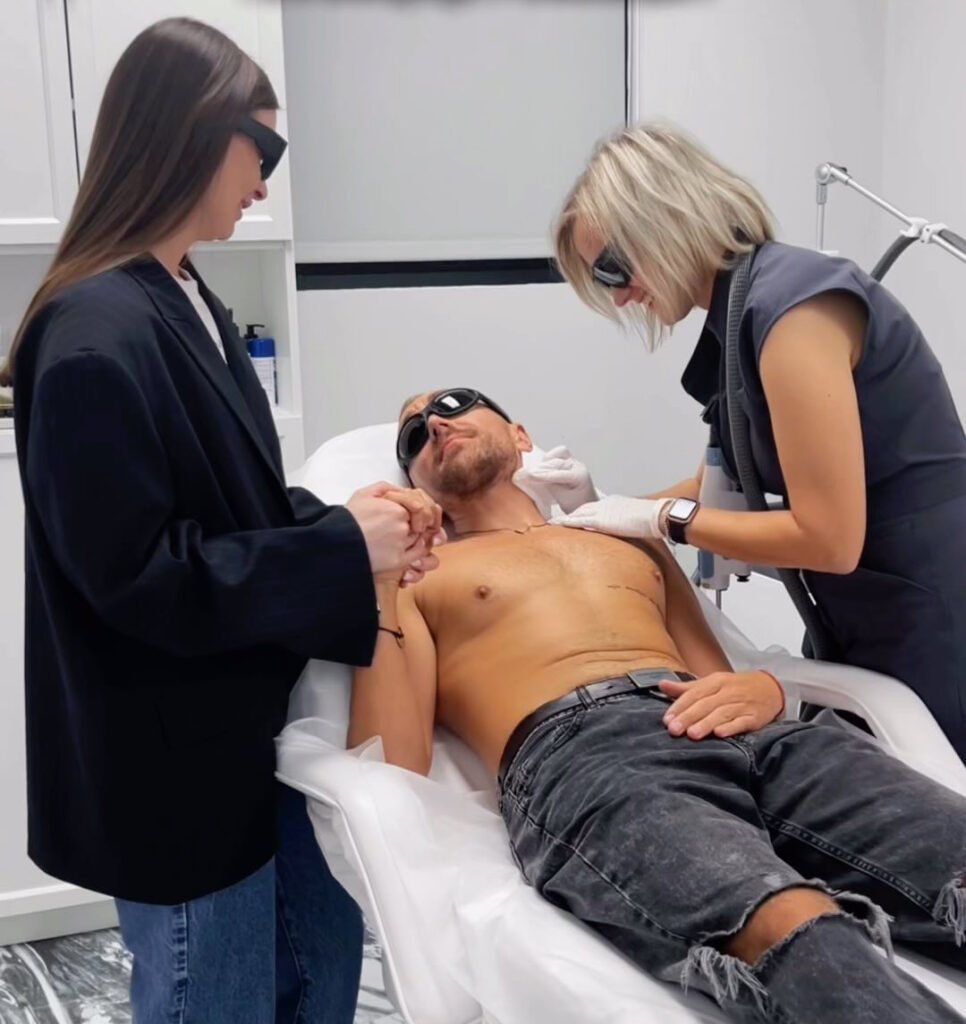
Laser hair removal can work well on deeper skin tones, but the treatment has to be planned carefully. Melanin gives skin its color, and the same pigment also helps laser energy find the hair. On darker skin, more pigment sits near the surface, so device choice and settings deserve extra attention.
For anyone researching laser hair removal dark skin Brooklyn, a proper consultation should come before a full session. Skin tone is only part of the picture. Hair thickness, density, recent sun exposure, the treatment area, and previous skin reactions can all change the plan.
Why Wavelength Choice Matters
Laser hair removal works by directing light toward pigment in the hair. Melanin absorbs that light, the energy turns into heat, and enough controlled heat can damage structures inside the follicle that support future hair growth.
The complication is simple: melanin is also present in the epidermis, the outer layer of skin.
On deeper skin tones, some of the laser energy can be absorbed closer to the surface. If too much heat builds there, irritation, burns, and pigment changes become more likely. That is why the wavelength, energy level, pulse duration, and cooling system all need to fit the person being treated.
Long-pulsed Nd:YAG lasers became important for darker skin because their 1064 nm wavelength is absorbed relatively weakly by epidermal melanin. This allows energy to reach the follicle with less unnecessary heating at the surface.
Diode lasers also widened treatment options for deeper skin tones. They commonly operate in the 800 nm range and can be used on a broad range of skin types when the device is appropriate and the settings are selected carefully.
Alexandrite and Diode technologies are used here, with settings adjusted according to skin tone, hair color, density, and treatment area.
The laser category alone does not decide safety. Fluence controls how much energy is delivered. Pulse duration affects how quickly that energy reaches the target. Spot size and cooling also influence the skin’s response.
The process can be simplified into five steps:
- Laser light reaches the hair and surrounding skin.
- Melanin inside the hair absorbs part of the energy.
- That energy converts into heat inside the follicle.
- Treatment settings control how much heat is produced and how quickly.
- Cooling helps protect the skin surface during the session.
A person can also need different settings on different body areas. Bikini hair may be coarse and dense. Abdominal growth can be much finer. Arms may carry more pigmentation after summer. Those details give the specialist useful information before choosing the parameters for each zone.
That is especially important with laser hair removal melanin skin. A careful starting point often makes sense. The skin’s response after each session then gives the specialist better information for the next one.
Questions Before You Book
A consultation should answer specific questions. General reassurance is not enough, especially for clients with deeper skin tones.
The goal is to understand how treatment will be adapted before a full session begins. Device choice, settings, patch testing, cooling, and aftercare should all be part of that conversation.
Which Laser Will Be Used?
Ask which technology is planned for the treatment area and why it fits the skin and hair being treated.
Hair thickness, color, density, and the body area all affect treatment planning. Recent tanning also deserves mention because extra surface pigment can change how much energy the skin absorbs.
A good assessment should reflect how the skin actually looks on the day of treatment, alongside the client’s natural skin type.
How Are Settings Chosen?
Treatment settings should be individualized.
Natural skin tone, current pigmentation, sensitivity, hair density, and previous session response all provide useful information. Different body areas can also respond differently, so the settings may need adjustment across a treatment course.
Electronic treatment records help here. Previous settings, skin response, and progress can be reviewed at later appointments instead of relying on memory.
Will There Be a Patch Test?
A patch test treats a small area first. The specialist can then check the immediate reaction and, when needed, the delayed response before treating a larger zone.
For clients comparing safe laser dark skin NYC options, this is worth asking about directly.
A patch test does not guarantee that every later session will be reaction-free. It does provide useful information at the beginning of a course and after significant changes in skin condition.
How Is Pigment Risk Managed?
Post-inflammatory hyperpigmentation, or PIH, is one of the main concerns for deeper skin tones.
Inflammation can stimulate melanocytes, the cells that produce pigment. Those cells may create extra melanin after irritation, leaving a darker patch once the initial redness settles. Burns, blistering, excessive heat, and sun exposure can increase that risk.
Hypopigmentation can also occur. In that case, an injured area becomes lighter because normal pigment production has been disrupted.
A qualified specialist lowers these risks through several practical steps:
- assessing natural skin tone and recent tanning before treatment;
- selecting settings that fit the current level of pigmentation and hair type;
- using cooling during the session;
- checking the skin closely as treatment progresses;
- giving clear instructions about sun, heat, friction, and active skincare afterward.
Medications should also come up during the consultation. Some increase photosensitivity. Retinoids, strong acids, recent peels, active irritation, and previous laser reactions are worth mentioning as well.
Results and Session Planning
Hair reduction takes several sessions because follicles do not all grow on the same schedule.
Laser works best during anagen, the active growth phase. At that point, the hair is closely connected to structures inside the follicle that need to absorb enough heat for treatment to have an effect.
Other hairs may be resting or transitioning during the same appointment. Those follicles become better targets later, so sessions are spaced several weeks apart to catch more hairs as they enter active growth.
Many body areas need around six to eight sessions. Some treatment plans run closer to six to ten, especially when facial hair, hormonal growth, density, or slower response comes into play.
Skin tone alone does not determine the session count.
Hair characteristics can be just as important. Coarse, dark hair usually gives the laser a strong pigment target. Fine hair may respond more slowly. Gray, white, very light blonde, and some red hair may contain too little useful pigment for laser to work reliably.
Electrolysis can be a better option for those hairs because it treats individual follicles without depending on melanin inside the hair.
Progress is often gradual. Hair may grow back more slowly first. Later, the area can become patchier, and individual hairs may return finer.
Facial growth can behave differently. Chin, neck, and upper-lip hair may be influenced by hormones, so new growth can appear even after a strong initial response.
For that reason, laser is better described as long-term hair reduction. Maintenance sessions may be useful later for some clients.
Clients considering laser hair removal brown skin should also pay close attention to the days around each appointment.
Sun exposure before treatment can increase surface pigment and affect the skin’s response. Waxing, threading, and plucking should stop ahead of the session because they remove the hair structure the laser needs to target. Shaving leaves that structure in place and is usually the preferred method between visits.
After treatment, mild redness, warmth, or small bumps around follicles can occur for a short time. The skin should be kept simple while that settles. Strong exfoliants, irritating actives, excessive heat, sauna, intense exercise, and unnecessary friction can make a freshly treated area more reactive.
Sun protection is especially important on exposed areas because UV exposure can encourage additional pigment production after inflammation.
Blistering, severe pain, marked swelling, or a persistent color change should not be dismissed as normal.
A good laser course is built through repeated assessment. Skin tone, hair density, recent sun exposure, the treatment area, and the reaction after each appointment all help shape the next session.
New clients can start with a complimentary consultation, where the skin and hair are assessed before a treatment plan is created. Patch testing can also be used when appropriate. For melanin-rich skin, that first appointment is the right place to discuss technology, settings, expected session count, and the precautions that should be followed before treatment begins.