
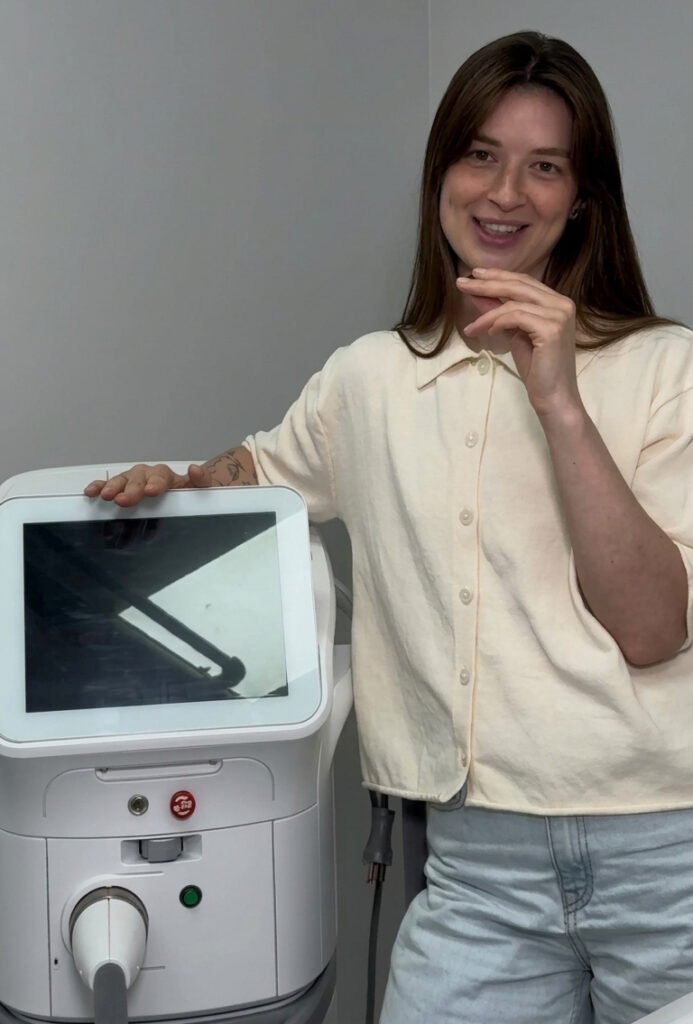
Laser and IPL are both light-based methods for reducing hair growth. The light sources for both models operate differently. That difference has varied effects on targeting, skin suitability, and the overall consistency of the result.
The first question in the laser vs IPL hair removal debate is what kind of light is reaching the follicle. Professional laser systems use a defined wavelength chosen for a specific target. IPL uses a broad band of filtered light. Both can heat melanin inside hair. The delivery pattern differs.
For hair reduction here, Alexandrite and Diode laser technology is used. Lumenis IPL has a separate role in the treatment menu, with treatments aimed at pigmentation, redness, visible vessels, and photoaging. That distinction is worth understanding before booking anything described simply as light-based hair removal.
How Light Delivery Differs
Hair reduction relies on selective photothermolysis. The name sounds technical; the basic idea is manageable. Melanin inside a dark hair absorbs light energy. That energy becomes heat. If enough controlled heat reaches the follicle during the right stage of the hair-growth cycle, structures involved in future growth can be damaged.
A laser produces light at a specific wavelength or a very narrow wavelength range. Alexandrite systems commonly operate around 755 nm. Many diode systems work around 800-810 nm. Each wavelength behaves differently in skin because melanin and other tissue components absorb light differently across the spectrum.
IPL, or intense pulsed light, works with a broader spectrum. Filters remove parts of that spectrum so the remaining light better suits the intended treatment. Hair pigment can still absorb the energy, and meaningful reduction is possible when the device, skin tone, and hair characteristics line up well.
The practical difference is control. A dedicated laser gives the specialist a known wavelength, then parameters such as fluence, pulse duration, spot size, and cooling can be adjusted around it. IPL adds filters and a broader wavelength band to that calculation.
Skin tone, hair color, hair thickness, recent tanning, and operator experience still shape the outcome.
Why Targeting Precision Changes
People sometimes say IPL “scatters” light. That wording is convenient and technically imprecise. IPL emits multiple wavelengths within a filtered range. Those wavelengths can interact with several chromophores, the light-absorbing molecules in skin. Melanin is one of them.
Laser treatment narrows the wavelength variable. IPL keeps a wider wavelength range in play.
A few details explain why that changes follicle targeting:
- Laser wavelength is defined. The practitioner knows which wavelength is being delivered and can select settings around its absorption and depth characteristics.
- IPL uses filters to shape a broad spectrum, so the exact output depends heavily on the device and treatment settings.
- Pulse design counts. Energy delivered too quickly can overheat surrounding skin; pulse duration is adjusted to the target and skin type.
- Cooling adds another layer of control, especially when surface pigment can absorb part of the light.
- Hair pigment still decides a lot. Dark terminal hairs usually provide a clearer target than very fine or lightly pigmented hairs.
Professional IPL systems can produce meaningful hair reduction. The term “IPL” covers many machines and parameter ranges, so the treatment name by itself says relatively little about likely performance.
For professional hair reduction, the laser vs intense pulsed light question is partly about precision and partly about matching the equipment to the person being treated.
What Home IPL Can Do
At-home devices deserve their own category. Most consumer hair-removal devices marketed for home use are IPL systems, and their energy output is intentionally limited for unsupervised use.
They can reduce regrowth. Consistency, realistic expectations, and the manufacturer’s skin-tone and hair-color restrictions become important.
Lower Energy, More Repetition
Home devices generally operate at lower fluence than professional equipment. Less energy is delivered per treatment, so repeated use becomes a major part of the process.
A short run of sessions may produce visible reduction. Maintenance is commonly needed afterward.
That is why IPL hair removal effectiveness should be judged over time. Studies support short-term reduction for several home devices. Longer-term results vary by device, schedule, hair characteristics, and continued use.
A result that looks strong after a few weeks can change once untreated follicles cycle back into growth, so early smoothness should not be confused with the final outcome. That distinction becomes clearer once regrowth is assessed later.
Results Depend on Contrast
Home IPL is usually most straightforward when the hair contains plenty of melanin and the surrounding skin falls within the device’s approved tone range.
Practical limitations include:
- Very light blonde, gray, white, and many red hairs may not absorb enough energy for reliable reduction.
- Darker or recently tanned skin can absorb more light at the surface, which can increase burn or pigment-change risk with unsuitable devices.
- Small treatment windows make large areas time-consuming, and missed patches can happen easily.
- Consumer devices cannot assess a changing skin reaction or make clinical adjustments during treatment.
Coarse, dark hair often responds well because it contains abundant melanin. Skin tone and device suitability still need to be considered at the same time.
Clinic Equipment Adds Control
Professional systems allow more precise adjustment of energy, pulse duration, cooling, and treatment technique. A consultation also adds assessment.
For laser hair reduction, skin tone, hair density, color, and treatment area are evaluated before settings are selected. A patch test can be used to check the skin’s response before a full session. Electronic treatment records help track settings and progress across the course.
That continuity becomes useful when one body area responds faster than another.
Who Should Avoid IPL
IPL is not suitable for every combination of skin tone and hair color.
Darker skin contains more epidermal melanin, so some IPL wavelengths can be absorbed near the surface. That can raise the risk of burns, hyperpigmentation, or hypopigmentation. Professional IPL has been used safely on some deeper skin tones with appropriate devices and settings. Careful selection is essential. Many home IPL devices have stricter skin-tone limits and should never be used outside the manufacturer’s approved range.
Tanned skin raises a similar concern because recent UV exposure increases surface pigment.
Hair color creates another limitation. Blonde, white, gray, and many red hairs contain too little melanin for reliable light-based targeting. Electrolysis can make more sense for isolated light hairs because it does not depend on pigment.
Fine hair can also be less predictable, especially when pigment is sparse.
The useful rule is simple: suitability should be based on the actual device, skin tone, hair color, and treatment area.
What to Ask Clinics
The word “laser” is sometimes used loosely in beauty marketing, including for IPL-based equipment. Before paying for a package, ask exactly which technology will perform the hair reduction.
A consultation should make these points clear:
- Is the device a true laser or IPL? Ask for the technology type and the actual system used.
- Which wavelength does the laser use? For IPL, ask which filters and skin types the machine is designed to treat.
- How are settings selected? Skin tone, hair color, density, treatment area, and previous response should all enter the decision.
- Is a patch test available? A small test area can provide useful information before a full first session.
- What result is realistic for this hair type? Light, fine, or hormonally influenced hair may need a different plan and sometimes another method.
For hair removal, Alexandrite and Diode systems are used here, with settings selected individually and cooling incorporated into treatment. Lumenis IPL is offered separately for skin concerns such as redness, pigmentation, visible vessels, and photoaging.
Before starting a course, a complimentary consultation can clarify the technology, likely session plan, and suitability for a specific skin and hair profile.