
An ingrown hair is familiar to anyone who has ever held a razor. It usually starts after the shaft has been cut very short or pulled out completely. As it grows back, a coarse or tightly curved hair can turn sideways, press into the follicle wall, or curl back under the nearby skin instead of clearing the surface.
Inflammation starts. The skin reacts to the buried hair because it perceives it as a foreign object, and, because it wants to protect the body, it leaves a tender bump, redness/itching, or a small pustule. If the same thing happens repeatedly to the same area, there is even a risk of dark post-inflammatory marks.
Waxing doesn’t completely remove that risk, though. The follicle stays active, so a new hair still has to get through the follicular canal and break the skin to exit it again.
That is when the inflammation starts. The skin reacts to the buried hair as foreign material, which can leave a tender bump, redness, itching, or a small pustule. If the same area keeps doing this after shaving or waxing, dark post-inflammatory marks can build up too.
People looking into ingrown hair laser hair removal are usually trying to solve the recurrence itself. Reducing coarse regrowth means fewer hairs are left to curl back into the skin and restart the cycle.
Why Hair Removal Causes Ingrowns
Shaving does not touch the follicle. It cuts the hair at or near skin level. With coarse or tightly curved hair, the new tip can penetrate the skin beside the follicle or grow inward through the follicular wall. Both provoke a foreign-body inflammatory reaction. The difference is mechanical. Dermatology guidance recommends avoiding skin stretching, repeated razor passes, and shaving against the direction of growth.
Waxing works differently. It removes the hair shaft from the follicle, so the smooth period lasts longer, commonly several weeks. Regrowth can still become ingrown, and pseudofolliculitis is documented in areas where hairs are plucked as well as shaved. Waxing delays visible regrowth; it does not remove the anatomy that allows a curved hair to re-enter skin.
A few details make recurrence more likely:
- Tightly curled or coarse terminal hair has a greater tendency to curve back toward the epidermis.
- A very close shave can leave a sharp tip below the surrounding skin level, especially when the skin is stretched.
- Repeated picking adds fresh trauma to a follicle that is already inflamed.
- Previous pseudofolliculitis can leave post-inflammatory hyperpigmentation, so a “dark spot” may remain after the trapped hair itself is gone.
- Pustules, spreading tenderness, or drainage can point to secondary folliculitis and need separate assessment.
Bikini and Leg Ingrowns
The bikini line and legs appear repeatedly in dermatology references because pseudofolliculitis is not limited to the beard. It can develop on the pubic area, axillae, and legs after shaving or plucking. On the bikini line, coarse terminal hair and frequent removal create a familiar setup for recurrence. On the legs, the sheer number of follicles means even a small percentage of ingrowns can produce many visible bumps.
Laser hair removal ingrown hairs Brooklyn consultations need more detail than “I get razor bumps.” The professionals need information on where and how often the bumps occur after hair removal, whether any specific method triggers them especially, and how the skin looks between episodes.
A painful pustule and a flat brown mark are not the same problem. Pseudofolliculitis, bacterial folliculitis, and post-inflammatory pigmentation can overlap visually, although still different management.
How Laser Stops Recurrence
Laser hair removal reduces the hair population that can create future ingrowns. Dark hair contains melanin, which absorbs laser light and converts it into heat. That controlled heat damages structures involved in hair growth. Clinical reviews of pseudofolliculitis report improvement after laser hair reduction because the number and thickness of hair shafts fall.
Follicle Targeting
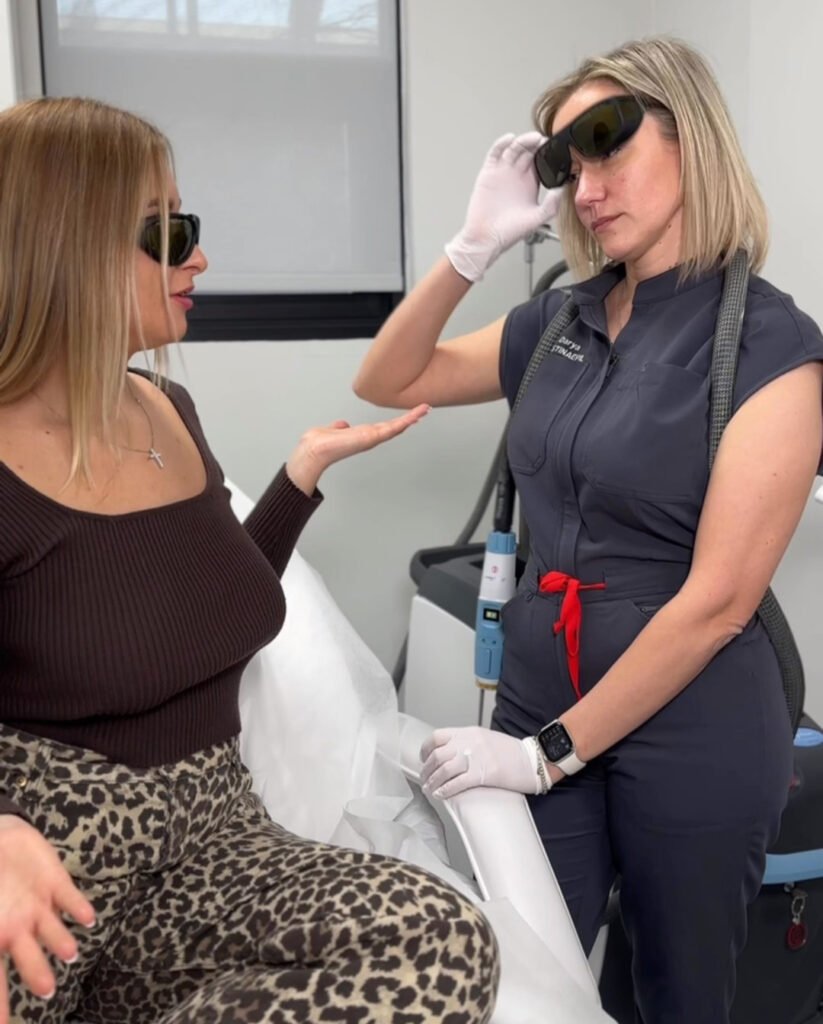
Treatment here uses Alexandrite and Diode technology, with settings selected according to skin tone, hair characteristics, and treatment area. Those devices rely on pigment in the hair, so dark terminal hair is generally a better target than gray, white, or very lightly pigmented hair. Cooling is used during treatment to manage surface heat and discomfort.
The basic sequence is short:
- Laser light reaches pigmented hair within the treatment area.
- Melanin absorbs part of that optical energy.
- The absorbed energy becomes heat.
- Heat affects growth structures inside the follicle.
- Repeated sessions reduce the density of hairs that return.
One study using an 810-nm diode laser treated pseudofolliculitis at 6-8 week intervals. After three sessions, investigators reported greater than 50% improvement and about a 50% reduction in hair density. That study was small, so its exact result should not be treated as universal.
Why Multiple Sessions Matter
Hair follicles move through different growth phases at different times. Laser is most effective during anagen, when the hair is actively growing and still is connected closely enough to the follicle for heat to damage the structures that produce it. Only part of the hair in a specific area is in anagen during any one appointment. Since the follicles aren’t synchronized, later sessions are needed for other follicles that enter that phase after the prior ones. Bikini-line treatment commonly takes 6-8 sessions spaced 4-6 weeks apart, while some areas need closer to 6-10.
For laser for ingrown hairs, improvement therefore builds gradually. As more active follicles are treated, fewer coarse hairs grow back, so fewer shafts are available to curve into the skin and trigger new inflammation. Over several sessions, slower regrowth and fewer recurring bumps are more useful signs of progress than how smooth the area looks immediately after one treatment.
What Laser Cannot Fix
Laser reduces future hair growth. It does not instantly erase post-inflammatory hyperpigmentation, flatten an established scar, or treat a bacterial infection. Those problems have their own timelines and, when necessary, their own dermatologic treatments. Fewer ingrowns can appear before old dark marks have faded.
Treat Current Ingrowns First
An existing ingrown needs to be judged by what the skin is doing that day. A quiet bump with no open skin is different from a hot, draining, increasingly painful lesion. Pseudofolliculitis can coexist with bacterial folliculitis, so active infection should not simply be treated as “another ingrown.”
Before a laser course, avoid:
- Digging under the skin with needles or tweezers; this adds trauma to an already inflamed area.
- Waxing, sugaring, or plucking, because laser treatment needs pigmented hair within the follicle.
- Aggressive scrubs over raw or pustular skin.
- Repeated razor passes over an already inflamed bump.
- Ignoring drainage, spreading redness, or increasing pain; those signs warrant medical assessment because folliculitis or another infection may be present.
Shaving is generally used between laser appointments because it shortens the visible hair while leaving the follicular target in place. If pseudofolliculitis is already active, dermatology guidance often recommends reducing or temporarily stopping the hair-removal practice that triggered it while inflammation settles. DermNet reports that PFB may take roughly 4-6 weeks to subside after the causative practice stops.
Skin After Ingrowns Decline
Fewer new bumps are usually the first sign that the cycle is slowing down. Skin texture often takes longer to improve because an inflamed follicle does not instantly look normal once the trapped hair is gone. Post-inflammatory hyperpigmentation may also remain after redness and swelling disappear, especially in darker skin tones. Existing scars can persist longer still.
That difference can be frustrating for someone trying to get rid of ingrown hairs permanently. A person may go weeks without a fresh ingrown and still see brown or grayish marks left by older episodes. That does not automatically mean the treatment is failing. Laser can reduce long-term hair growth and lower the recurrence of pseudofolliculitis, while leftover pigment follows a separate recovery process. No treatment can guarantee that every follicle will remain inactive forever.
Progress is easier to judge across several months. A spot that used to become inflamed after nearly every shave may stop reacting so often. Shaving itself may become less frequent as hair density drops. At the same time, an older dark mark can still be visible because pigment often fades much more slowly than active inflammation.
It helps to track those changes separately. New bumps, shaving frequency, and old discoloration do not always improve at the same speed. If fresh inflammation has become uncommon while older marks are still visible, that can still represent clear progress.
For recurring ingrowns on the bikini line, underarms, legs, or face, a complimentary consultation can help identify what is driving the problem before treatment begins. Hair thickness, color, the condition of the skin, and the pattern of previous flare-ups all influence the plan. If the area is still actively irritated, it may need time to settle before laser treatment starts.