
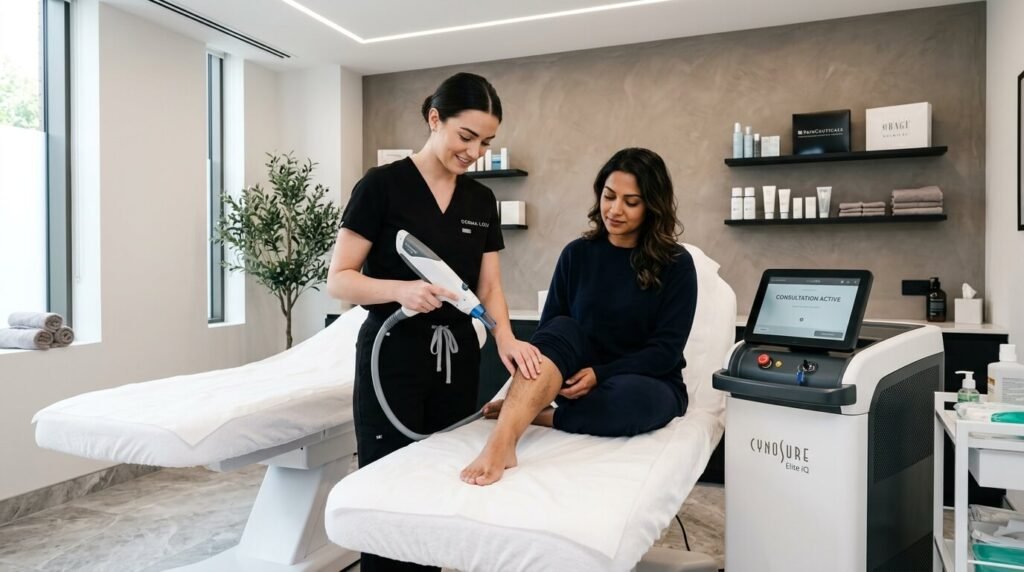
Laser hair removal has gone from a niche cosmetic treatment to one of the most common reasons people book a consultation at a med spa or dermatology clinic. That popularity comes with a downside: there are now far more providers offering it than there are providers doing it well. The equipment ranges from genuine medical-grade lasers to underpowered devices marketed with the same language. The technicians range from licensed professionals with years of training to staff who took a weekend certification course.
None of that is visible from a website or a price list. This guide walks through what actually separates a competent laser hair removal provider from a mediocre one, what to ask before you book, and how to prepare once you’ve chosen someone.
How Laser Hair Removal Actually Works
Before evaluating a clinic, it helps to understand what the treatment is actually doing, since that knowledge is exactly what lets you tell a good provider from a bad one during a consultation.
Laser hair removal uses a concentrated beam of light tuned to a wavelength that’s absorbed by melanin, the pigment found in hair follicles. That absorbed light converts to heat, and the heat damages the follicle’s ability to keep producing hair. Because the laser targets pigment specifically, it can disable a follicle while leaving the surrounding skin largely unaffected, provided the device and settings are matched correctly to the person’s skin tone.
It’s worth being precise about a distinction that gets blurred constantly in marketing: laser and IPL are not the same technology. Laser hair removal uses a single, focused wavelength of light aimed specifically at the follicle. IPL, or intense pulsed light, spreads a broader spectrum of light across the treatment area, which makes it less precise and generally produces results that fade faster. Some clinics use the terms interchangeably in their marketing, which is exactly why it’s worth asking directly which technology you’re being offered. A closer look at how laser, IPL, and electrolysis actually compare covers this distinction in more depth if you want the full picture before you book anywhere.
Who Gets the Best Results
Laser hair removal isn’t equally effective for everyone, and a clinic that doesn’t explain this upfront is skipping a conversation that matters.
The clearest results come from dark, coarse hair on lighter skin, since the strong contrast between hair and skin pigment makes it easy for the laser to target the follicle precisely. That doesn’t mean darker skin tones are excluded. Longer-wavelength lasers, most commonly Nd:YAG systems, are specifically designed to treat medium to deep skin tones safely by penetrating deeper while being absorbed less by pigment at the skin’s surface. What it does mean is that the choice of equipment matters more for darker skin, and a clinic offering only one type of laser for every client is a red flag rather than a convenience.
The one category laser generally can’t help is very light blonde, gray, or white hair, since there simply isn’t enough pigment in the follicle for the laser to lock onto. If that describes your hair, a good clinic should tell you that honestly rather than sell you a package that won’t deliver results, and should be able to point you toward electrolysis as the more effective alternative for that hair type.
Multiple sessions are also non-negotiable, and any provider suggesting otherwise should raise a flag. Hair grows in cycles, and a laser can only affect follicles that are actively growing at the time of treatment. Since not every follicle is in that phase simultaneously, most people need somewhere between six and ten sessions, spaced roughly four to eight weeks apart, to see the full effect.
What a Properly Run Clinic Looks Like
The single biggest factor in both safety and results isn’t the brand name on the laser, it’s who’s operating it and how the practice is run.
Licensing and oversight. In the US, requirements for who can legally operate a laser hair removal device vary by state, with some requiring a physician, nurse practitioner, or physician assistant to supervise treatments, and others allowing licensed aestheticians with specific laser certification to perform them independently. A legitimate clinic will be upfront about who is treating you and what their credentials are, rather than being vague about staff qualifications.
Medical-grade equipment. Ask specifically what laser system the clinic uses. Diode, Alexandrite, and Nd:YAG are the three main clinical laser types, each suited to different hair and skin combinations. A clinic that can name their equipment and explain why it fits your skin tone is demonstrating real expertise. A clinic that answers vaguely, or that seems to be using the same generic setting on every client regardless of skin tone, is a warning sign worth taking seriously.
A real consultation before treatment. A thorough first visit should include an assessment of your skin tone, hair color and texture, and a realistic session estimate for your specific treatment areas, not a generic number pulled from a price list. If a provider skips straight from “hello” to “here’s our package pricing” without looking closely at your skin and hair, that’s usually a sign the rest of the process will be equally generic.
Reading Reviews the Right Way
Reviews are useful, but only if you read them with a bit of skepticism about what they’re actually telling you.
Look past the star rating and read for specifics. Comments that mention a specific technician by name, describe the actual treatment experience, or reference results over multiple sessions tend to be more reliable than a wave of five-star ratings with no detail. It’s also worth checking whether reviews mention consistency, seeing the same specialist across sessions rather than a different person every time, since continuity of care tends to correlate with better tracking of your progress and more consistent settings session to session.
A pattern worth watching for: complaints specifically about lack of results despite completing a full course, especially clustered around a particular skin tone or hair type. That kind of pattern often points to a clinic using one generic setting for every client rather than adjusting based on individual assessment.
Questions Worth Asking at a Consultation
A consultation is your best opportunity to evaluate a provider before committing to a multi-session package, and a few direct questions go a long way.
Ask what type of laser system they use and why it’s appropriate for your specific skin tone and hair color. Ask how many sessions they realistically expect you’ll need for each area you’re considering, rather than accepting a one-size answer. Ask about the potential side effects and how the clinic handles them if something feels off after a session. Ask what preparation and aftercare look like, since a provider who has a clear, specific protocol here is usually more careful across the board. And ask plainly whether the sessions are spaced on a schedule that matches your calendar, since consistency between sessions genuinely affects the outcome; skipping around erratically resets progress in a way that’s hard to recover from later in the course.
You’re not obligated to commit just because you’ve had a consultation. It’s entirely reasonable to meet with more than one provider before deciding, particularly if you’re planning to invest in a full treatment course covering several body areas like legs or a full body plan.
Preparing for Your First Session
A little preparation makes a real difference in both comfort and results, and it’s largely the same regardless of which clinic you choose.
Avoid sun exposure and tanning for at least two to four weeks before treatment, since tanned or sunburned skin raises the risk of an adverse reaction and can reduce how effective the session is. Shave the treatment area about a day before your appointment rather than waxing or plucking, since the laser needs the hair root intact under the skin to have something to target. Skip other hair removal methods entirely in the weeks leading up to a session for the same reason. Arrive with clean skin, free of lotions, oils, or deodorant on the areas being treated, since these can interfere with how the laser interacts with the skin. And mention any medications you’re taking during your consultation, since some increase photosensitivity and can affect how your skin responds to treatment.
What Actually Happens During a Session
A typical session follows a fairly consistent pattern regardless of provider. You’ll be given protective eyewear before treatment starts. The treatment area may be marked with a grid to make sure no spot gets missed, and many devices include a built-in cooling mechanism that keeps the skin comfortable throughout. The technician then delivers pulses of light across the treatment area; most people describe each pulse as a quick warm snap, similar to a light rubber band flick against the skin.
Session length depends heavily on the size of the area. Smaller zones like the upper lip or underarms often take just a few minutes, while larger areas like full legs or the back can take closer to an hour. Afterward, mild redness, warmth, or slight swelling in the treated area is completely normal and typically settles within a few hours, similar to a light sunburn reaction.
Aftercare That Actually Protects Your Results
What you do between sessions matters almost as much as the sessions themselves. Sun exposure on treated skin should be avoided, or at minimum covered with a broad-spectrum SPF 30 or higher, since treated skin is more sensitive to UV exposure in the days following a session. Hot showers, saunas, and anything that causes heavy sweating are worth skipping for the first day or two. Keep the area gently moisturized to support healing, and avoid harsh exfoliants for at least a week afterward.
The one hair removal method that’s fine to use between sessions is shaving, since it doesn’t disturb the follicle. Waxing, plucking, or using depilatory creams between appointments should be avoided entirely, since all three remove hair from the root, which is precisely what the laser needs intact to work on the next visit.
Common Myths Worth Clearing Up
A few misconceptions come up often enough that they’re worth addressing directly.
“It’s too painful to be worth it.” Most people find the sensation far more tolerable than they expect, generally described as a quick warm snap rather than sharp pain. Cooling technology built into most modern devices makes the experience considerably more comfortable than older systems from a decade ago.
“It’s only for women.” Laser hair removal is equally common for men, with the back, chest, shoulders, and beard line being some of the most frequently requested areas.
“Results aren’t really permanent.” This one deserves nuance rather than a flat yes or no. Laser hair removal delivers a substantial, long-lasting reduction in hair growth for most people, but it’s not an absolute guarantee that every single hair is gone forever. Hormonal shifts and aging can occasionally reactivate a follicle that had gone dormant, which is why occasional maintenance sessions, usually just once or twice a year, are common even after a full course is finished.
“It doesn’t work on darker skin.” This was true of older laser technology, but it’s outdated today. Modern Nd:YAG systems are specifically designed to treat medium to deep skin tones safely and effectively; the key is making sure the clinic actually has that equipment and knows how to use it.
“It’s too expensive to be worth it.” Whatever the upfront cost, it’s worth weighing against the cumulative cost of shaving or waxing the same areas for years. Most people who’ve completed a full course say the same thing: they wish they’d started sooner.
Making Your Decision
Choosing where to go for laser hair removal comes down to a handful of concrete checks rather than a gut feeling about a website or an ad. Confirm the staff performing treatments are properly trained and licensed for your state’s requirements. Ask specifically what laser system is used and whether it’s suited to your skin tone. Read reviews with an eye for specifics rather than star counts alone. And use the consultation to ask direct questions rather than treating it as a formality before booking.
A provider who welcomes those questions and answers them specifically is usually the one worth trusting with a treatment plan that spans several months. One final piece of practical advice: understanding roughly what a full course involves before you start makes it much easier to spot a realistic, well-run treatment plan when you see one, and to recognize when a provider’s promises don’t quite add up.