
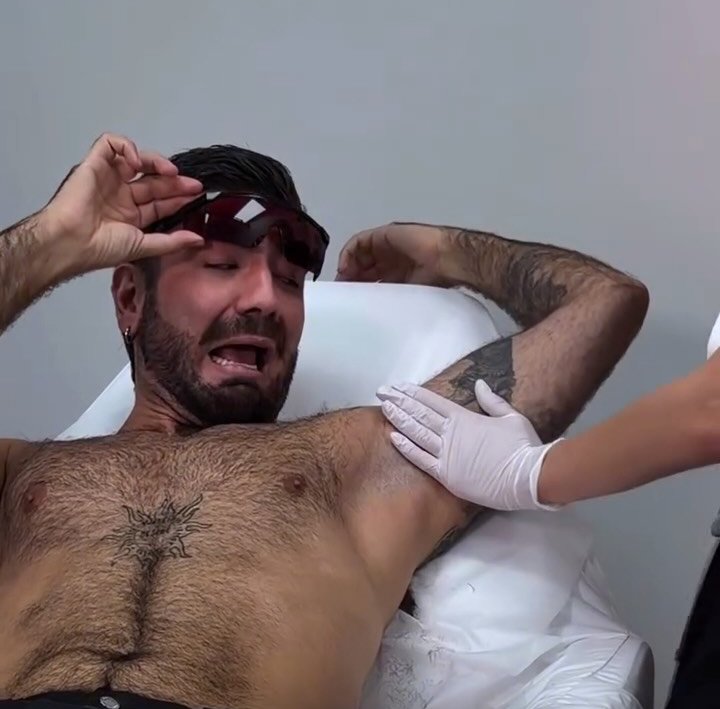
Men’s laser hair removal changes considerably by treatment area. Beard hair is dense and deeply rooted. Back and shoulder hair covers a broad surface. Chest hair can vary sharply in thickness across the same zone.
Those differences affect settings, appointment length, session count, and the amount of reduction planned. For clients comparing laser hair removal men Brooklyn services, the useful questions are specific: which areas respond well, how coarse male hair changes treatment, and what actually happens during an appointment.
Popular Areas for Men
The beard, neck, chest, back, and shoulders are among the most practical areas to treat because the hair there is often coarse, visible, and repeatedly groomed.
Each zone has its own treatment logic:
- Beard and neck: Laser can clear growth below the jaw, reduce recurring neck hair, or define a chosen beard outline. Coarse facial hair often responds visibly, although the area can feel sensitive after treatment.
- Back and shoulders: Coverage needs to be agreed on before the session. Hair often continues across the shoulder line or lower back, so an abrupt stopping point can leave a noticeable transition.
- Chest: Some men want substantial reduction across the entire area; others prefer lower density. Hair thickness and distribution are assessed before settings are chosen.
- Sideburns: Small adjustments can noticeably change the overall beard shape. The intended line and length should be decided carefully before repeated treatment.
- Upper neck: Hair may grow in several directions, and frequent shaving can leave irritation or ingrown hairs. Laser reduces the amount of hair that needs routine removal.
A male laser hair removal back plan also has to account for surface area. Dense growth across the back takes longer to treat than a small facial zone. Shoulder coverage may be added when the hair continues beyond the back, so clear boundaries help.
Why Male Hair Differs
Androgens influence terminal hair growth on the face and body. In many men, that produces the thick, pigmented hairs commonly seen on the beard, chest, abdomen, back, and shoulders. Those hairs contain substantial melanin, which gives the laser a strong target.
Laser hair removal works through selective photothermolysis. Light is absorbed by melanin inside the hair and converted into heat. The heat damages structures within the follicle that support future growth. Skin tone, hair color, thickness, density, and the selected device settings all influence the response.
The hair growth cycle explains why repeated sessions are necessary:
- Anagen: The hair is actively growing and remains closely connected to the follicle structures that need to absorb heat. This is the most responsive stage for laser treatment.
- Catagen: Growth slows and the follicle begins transitioning. Hair in this phase is a weaker target during that appointment.
- Telogen: The follicle rests before another growth cycle begins. A later session can target the hair once it returns to active growth.
A beard can show changes after the first few appointments, yet a full course still takes time. Beard treatment is generally planned across about six to ten sessions. Other body areas are assessed individually, with appointments commonly spaced several weeks apart according to the growth cycle.
Coarse hair can respond strongly because it carries plenty of pigment. Density adds another variable. A thick beard places many active follicles close together, while back or chest treatment involves a much larger area. Settings are adjusted according to both skin and hair characteristics, with cooling used during treatment for comfort.
Why Grooming Habits Change
Shaving removes hair at skin level. The follicle continues producing new hair, which is why visible regrowth returns quickly. Laser targets the follicle itself, so each effective session reduces the amount of hair that grows back.
That changes the upkeep. A neck that needed frequent shaving may need much less attention. Back hair becomes easier to manage as fewer hairs return. Beard edges stay cleaner once growth outside the chosen line has been reduced.
Interest in men laser hair removal NYC services often centers on a few practical outcomes:
- Less frequent shaving on areas that grow back quickly.
- Razor bumps and ingrown hairs may become less frequent as the amount of hair requiring shaving decreases.
- Large areas such as the back and shoulders no longer depend on difficult home grooming.
- Chest hair can be reduced to a chosen density instead of repeatedly removed at the surface.
- Defined facial borders require less repeated cleanup after a treatment course.
The desired amount of reduction should be discussed early, especially on the chest, beard, and sideburns where some hair may be intentionally left in place.
This point is easy to overlook. Full removal is very clear as a goal. Partial reduction needs a little more planning because the final density still has to look intentional once the course progresses.
Beard Lines With Laser
Beard shaping is more precise than treating a large body area. A few millimeters can change the cheek line, sideburn length, or lower beard border.
For men beard laser Brooklyn treatment, the first decision is the contour itself. Laser can reduce hair beneath the jaw, clean up the upper cheek line, shape the sideburns, or treat a broader section of facial hair.
A conservative outline is usually sensible at the beginning. Beard preferences change, and repeated laser treatment is intended to reduce future growth in the treated follicles. Leaving a little room around the final edge keeps more styling flexibility later.
Natural growth should guide the shape too. Facial hair is not always symmetrical, so each side may need a slightly different correction.
Beard sessions can cause temporary warmth or sensitivity afterward. Shaving and rubbing the area should be avoided for two to three days. Sun exposure should be limited, and sauna, pool, and gym visits are paused for the first 24 hours. Protective and moisturizing products can be used as advised.
There is another practical point here. Beard shaping works best when the chosen border makes sense with the man’s natural growth pattern. A line that looks sharp immediately after shaving can look very different once several millimeters of beard grow in. That is worth checking before repeated sessions lock in the shape.
What Your Appointment Includes
A men’s laser appointment follows a clear sequence, adjusted for the treatment zone, hair density, skin tone, and requested reduction.
Consultation and Planning
The first visit establishes the treatment area and expected course. Skin tone, hair thickness, density, and distribution are assessed before settings are selected.
Beard and sideburn clients should decide on the contour in advance. Large body areas need clearly defined borders as well. On the back, for example, that may mean deciding if shoulder growth and lower-back hair belong in the same plan.
Pricing varies according to the treatment area, hair density, and number of sessions. A complimentary consultation gives clients a chance to discuss those details before committing to a course.
Preparing for the Session
Root-removal methods such as waxing should be stopped before laser because the follicle needs to contain hair for the laser to target. Shaving is recommended instead. For beard treatment, shaving the day before the appointment is advised.
Sun and self-tanner should also be avoided in advance. Creams, oils, and similar products stay off the treatment area on session day. Any medication that increases sensitivity to light should be mentioned before treatment.
Preparation is fairly simple, but skipping it can affect the session. Waxing shortly beforehand removes the target the laser needs. Recent tanning can change how the skin responds to energy. Those details are worth getting right.
During Treatment
Alexandrite and Diode technology is used, with settings selected according to the client’s skin and hair. A built-in cooling system helps manage heat and discomfort during the pulses.
Treatment time depends heavily on the area. A beard or neck section is relatively contained. Chest, back, and shoulders require broader coverage and may take longer.
Electronic treatment records keep previous settings and progress available across the course. That helps later appointments build on the response seen during earlier sessions instead of treating every visit as a fresh start.
Aftercare and Follow-Up
Temporary redness, warmth, tingling, or slight swelling around follicles can occur after laser. Heat, heavy friction, intense exercise, and sun exposure are limited according to the treatment area and aftercare instructions.
Later appointments are scheduled around the growth cycle. Hair may return more slowly, look patchier, and become finer as treatment progresses. Maintenance can be useful after the initial course in some areas.
Clients ready to reduce beard, chest, shoulder, back, or neck hair can book a complimentary consultation for a treatment plan based on the area, density, and desired reduction. Session estimates, pricing, preparation, and treatment boundaries can all be confirmed there.